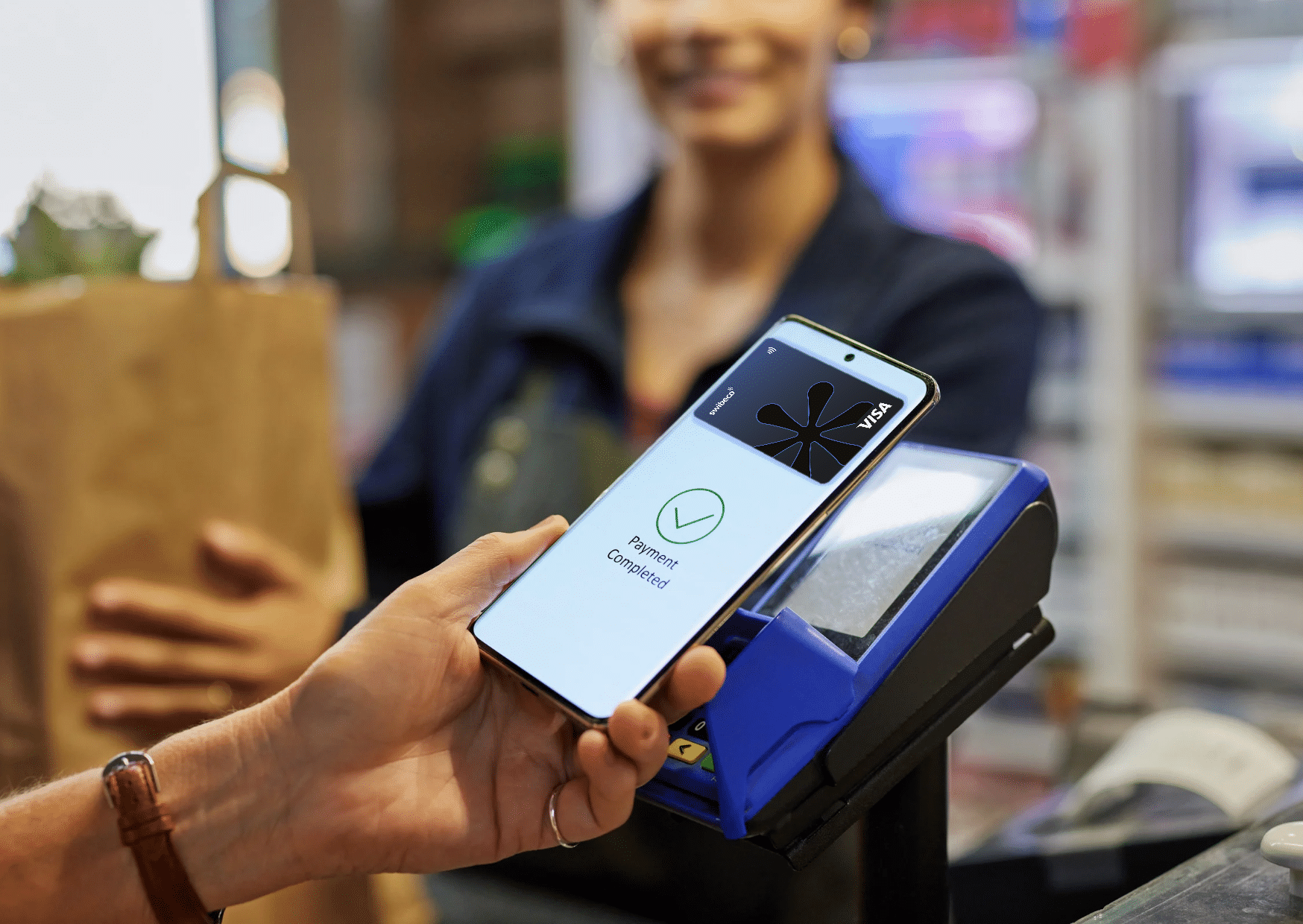
Since 29 October 2026, the Swibeco Lunch budget is no longer limited to restaurants: it also covers meals bought at supermarkets or petrol stations. Employees photograph their receipt, the app converts the eligible share into credit and the employer has nothing to add to its current budget.
For HR teams and company administrators, this change answers a simple question: how can you make sure the meal benefit is actually used by everyone, whatever their workplace, working hours or lunch budget? This article explains how the new feature works, what it means in practice for your company and the framework in which the Lunch budget operates in Switzerland.
Why the lunch break puts budgets under pressure
In a survey conducted by Swibeco, 37% of employees set themselves a limit of between CHF 10.- and CHF 15.- per day for their lunch. With restaurant prices rising, supermarkets and petrol stations are becoming natural alternatives.
For other teams, the obstacle is geographical: no places to eat near the workplace, days spent on the road or remote work on a daily basis.
A meal benefit designed only for restaurants therefore risks leaving some employees out. Opening it up to supermarkets and petrol stations adapts the Lunch budget to habits that vary greatly from one person to the next.
How to use the Lunch budget at supermarkets and petrol stations
The process takes four steps, all carried out from the employee’s phone.
- After their purchase, employees take a photo of their receipt in the Swibeco App.
- Artificial intelligence checks that the receipt is genuine and legible, then identifies the share of the purchases that falls within the scope of the budget.
- Employees confirm this amount, which moves from their Lunch budget to a separate budget called “Supermarket & petrol station”.
- This credit can then be spent with the Swibeco Card at the supermarkets and petrol stations of their choice in Switzerland.
There are two limits to be aware of: alcoholic drinks and all non-food items are excluded and the shop must be located in Switzerland.
The Swibeco Card network, which already exceeds 140’000 points of sale in Switzerland, is therefore growing even further.
What this means for HR teams and administrators
From the company’s point of view, implementation costs nothing extra: the amount allocated to the Lunch budget remains the same as before. HR teams have no receipts to check, as this step is handled by Swibeco.
The main benefit lies in uptake: a budget that works wherever employees have lunch is more likely to be used by everyone, including teams on the move or working remotely.
To make the most of it, remember to inform your employees of this option, particularly mobile teams and those who work remotely.
The tax and social security framework for the Lunch budget in Switzerland
In Switzerland, an employer’s contribution to lunch costs paid in the form of meal vouchers or meal cards is not considered part of salary up to CHF 180.- per month per employee. It is therefore subject neither to AHV contributions nor to income tax, unlike an allowance paid in cash.
One administrative point directly concerns HR departments: in this case, box G of the salary certificate must be ticked, and some cantons have their own requirements. We recommend that you confirm the details with your fiduciary or your cantonal tax authority.
The Swibeco Lunch budget works on the same principle: the employer tops up the Swibeco Card and the meal contribution qualifies for the exemption up to CHF 180.- per month.
A benefit that is useful to everyone and an alternative to a pay rise
A meal is taken every working day, which makes the Lunch budget one of the most frequently used benefits. With every payment, employees see in concrete terms what their employer makes available to them.
With pressure on purchasing power, the Lunch budget can serve as an alternative to a pay rise. Up to CHF 180.- per month, each franc paid into a meal budget is reduced by neither taxes nor social security contributions, unlike a franc of salary.
Frequently asked questions about workplace meal benefits
What is a meal benefit and how does it work in Switzerland?
A meal benefit is an employer’s contribution to its employees’ lunch costs. It can take the form of meal vouchers, a meal card or a cash allowance. In Switzerland, voucher and card schemes benefit from favourable treatment, as described above.
How much can an employer pay without social security contributions or taxes?
Up to CHF 180.- per month per employee, an employer’s contribution paid in the form of meal vouchers or a meal card is not considered part of salary and is not subject to AHV, according to Weka. Above this ceiling, the amount is treated as salary.
What is the difference between a meal card and a cash allowance?
Their social security and tax treatment. A meal allowance paid in cash is subject to AHV, whereas the same contribution paid in meal vouchers or on a meal card is exempt up to CHF 180.- per month. For the same cost to the employer, employees therefore enjoy greater purchasing power.
Can a meal benefit replace a pay rise?
It can complement it or reduce it. Up to the ceiling of CHF 180.- per month, an amount paid for meals is exempt from AHV and tax, whereas salary is subject to them. However, this solution depends on your pay policy and employment contracts: confirm it with your fiduciary or legal department.
Is a meal benefit suitable for remote or travelling teams?
Yes, provided it does not depend on a company canteen. A meal card or app that can be used at different retailers, such as the Swibeco Card, also benefits employees who work remotely, who are often on the road or who have no places to eat nearby.
Are meal benefits common in Europe?
Yes. In Belgium, 62% of employers offer meal vouchers, according to a study by SD Worx, and their maximum value rose from EUR 8 to EUR 10 per day on 1 January 2026. France, Italy and Spain also have capped schemes in which the employer’s share is exempt from contributions, according to Access Financial.
How do you choose a meal benefit solution for your company?
Four criteria help you decide: the size of the acceptance network, flexibility of use (restaurants, takeaway meals, groceries), the administrative workload for HR and compliance with the tax and social security framework. A solution that covers every lunchtime habit is more likely to be used by all teams.
What does the new Swibeco Lunch budget feature offer?
Since 29 October 2026, the Lunch budget can also be used for meals bought at supermarkets or petrol stations by scanning the receipt in the app, at no extra cost to the employer. How it works is described earlier in this article.
Download the press release
Find all the details of the announcement in Swibeco’s official press release dated 29 October 2026.
Would you like to offer the Lunch budget to your teams or find out how it can be adapted to your company? Contact the Swibeco team to discuss it.